Before it names a rug, Azilal is a province of the central High Atlas in Morocco, between Marrakesh and Beni Mellal. Women of the local tribes knot rugs there with an ivory ground and free, colourful motifs, which have found their place in contemporary interiors.
The Azilal region
The province spreads around the Aït Bouguemez valley, nicknamed “the happy valley”. Its tribes include the Aït Bou Oulli and the Aït Soukhmane. Summers are mild, winters harsh and cold.
It was for winter that women first knotted these rugs: they served as blankets and mattresses for the whole family, before also becoming a source of income.
How it is made
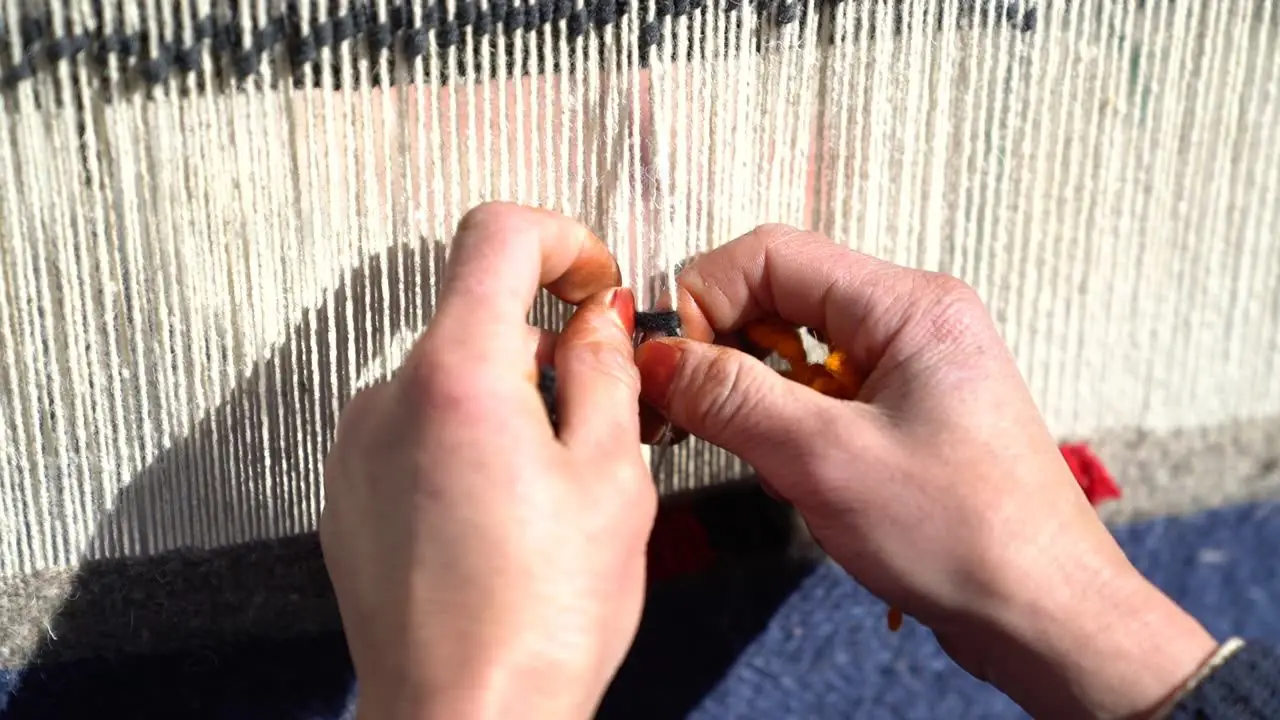
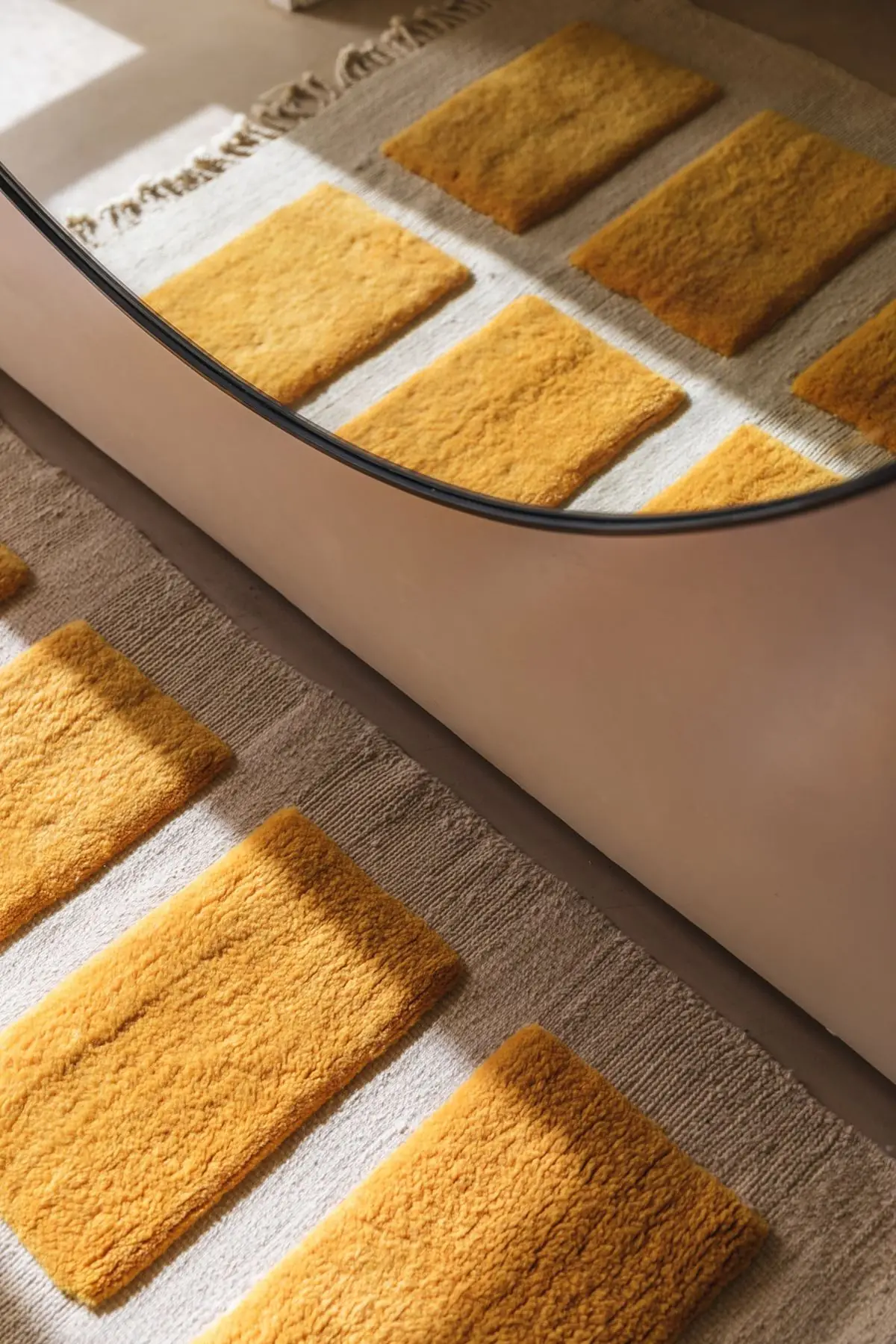
Each Azilal rug is knotted by hand, with skills passed from mother to daughter. The ground is undyed or white wool, often from the first shearing. The motifs use dyed wool, sometimes cotton or recycled fabric. The pile is shorter than that of a Beni Ouarain.
Motifs that tell a story
On the pale ground, the weaver draws her life: marriage, fertility, motherhood, birth, rural life. She takes up the signs of her grandmothers, sometimes letters of the Tifinagh alphabet, or composes free, broken geometric forms as she goes. No two Azilal rugs are alike. What these signs are said to mean is covered in patterns and signs in Berber crafts.
Azilal colours
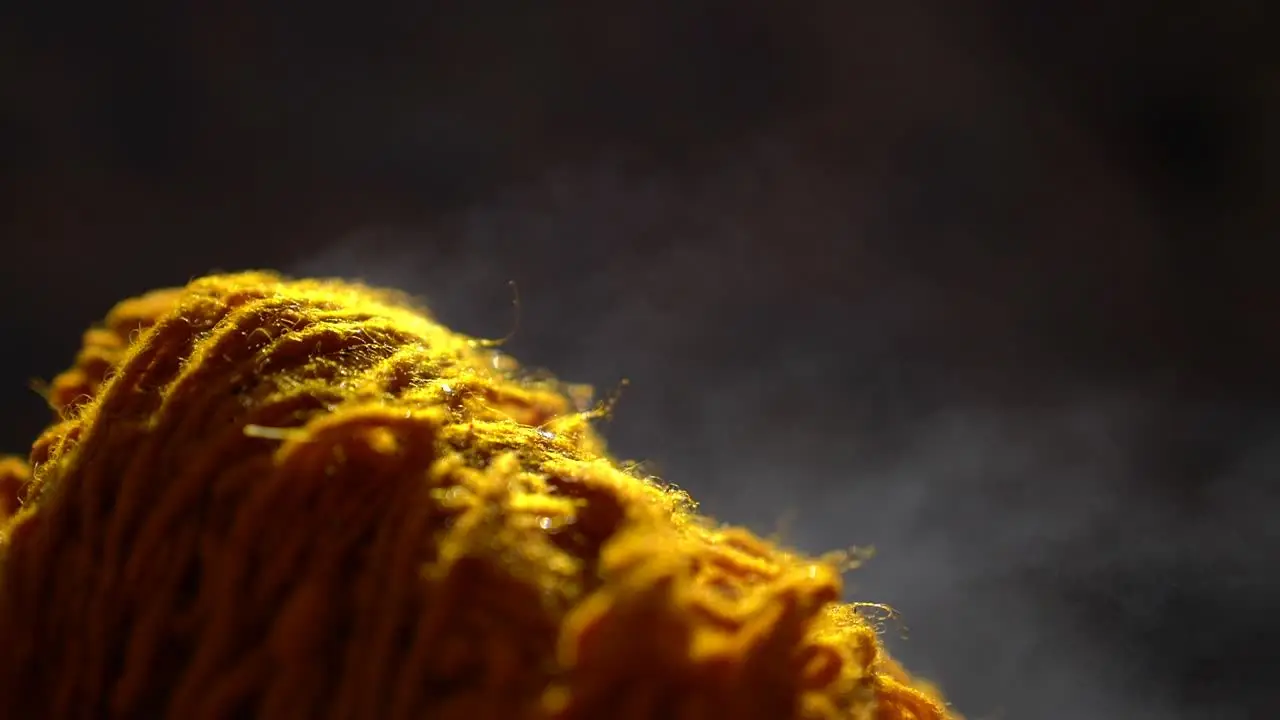
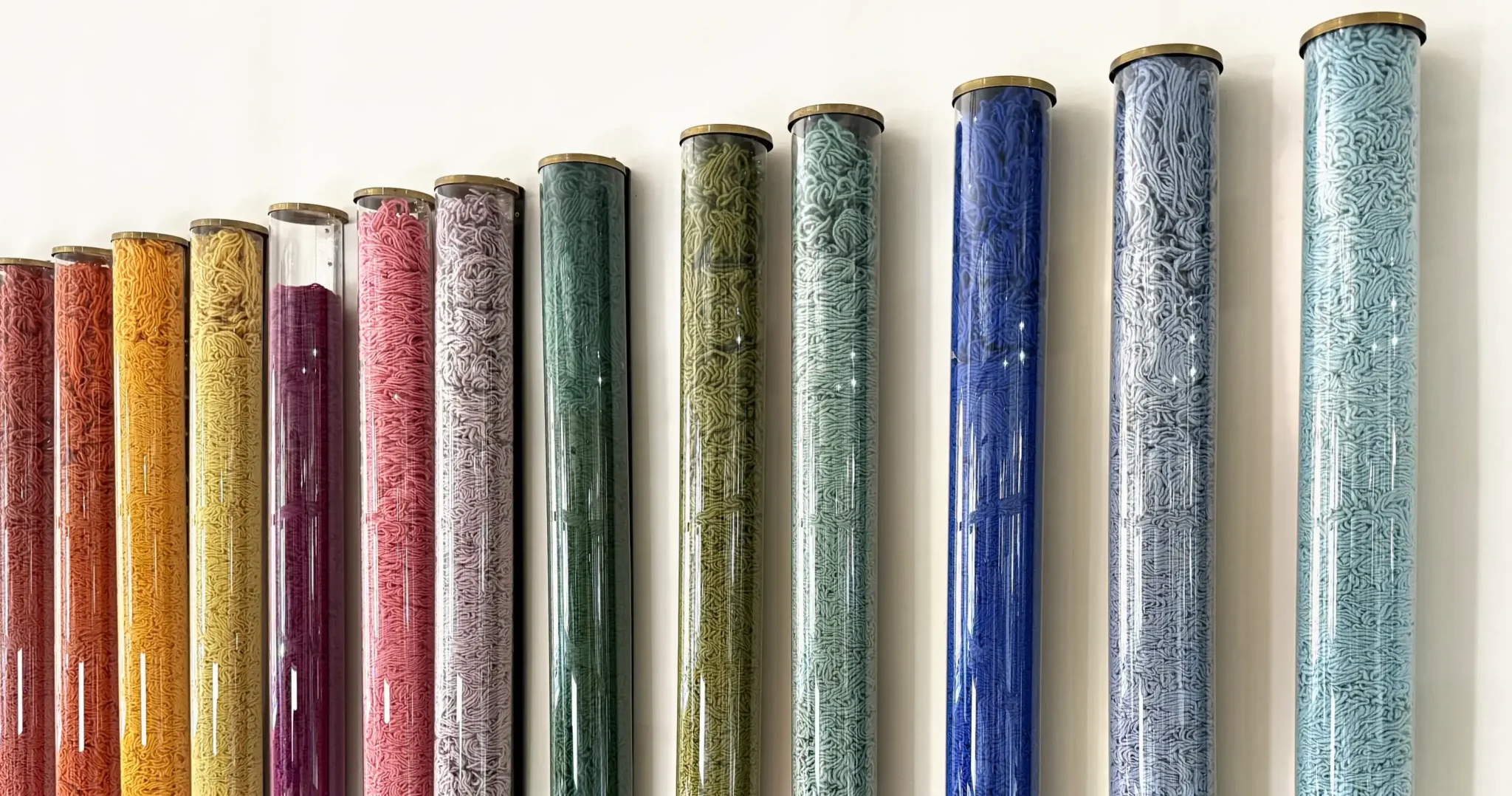
Old rugs were dyed with natural pigments: henna, pomegranate, madder, saffron. More recent ones also use synthetic dyes, hence bright, sometimes neon tones: pink, orange, green, yellow, blue.
The Azilal rug at home
Often small, an Azilal rug works in a living room, a bedroom, a hallway, or on a wall as a graphic piece. Its colours sit well with calm interiors and natural materials.
It is often compared with the so-called Ourika rugs, knotted a little further south by High Atlas tribes, from Demnate to Imlil, around the Ourika valley.
Further reading: vegetable silk (sabra), another material of colourful rugs. The materials the studio uses are on the Materials page.