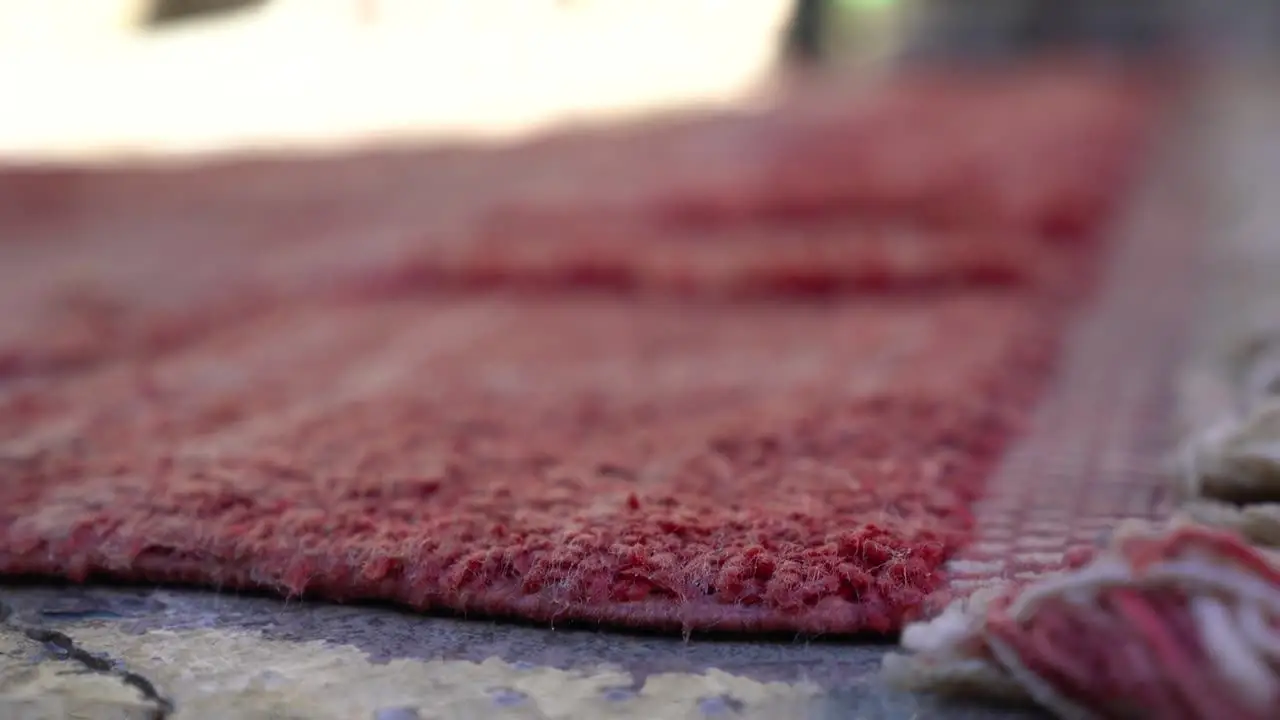
Wool is a resilient fibre: it springs back after a chair, resists dirt through its natural lanolin and holds its colour for a long time. A Berber wool rug, such as a cream Beni Ouarain, still asks for precise gestures, and the palest are the most delicate. Here is how to clean a Berber wool rug without damaging it.
How to clean a Berber wool rug: 9 things to know
1. Vacuum often, and gently
Care starts before the stain. Vacuum at least once a week, twice in busy rooms, so dust never settles into the wool. Use suction only or a soft brush, in the direction of the pile. Avoid rotating brushes, above all on a new rug: they pull the fibres out. Do not vacuum the fringes; comb them by hand.
2. Shedding is normal
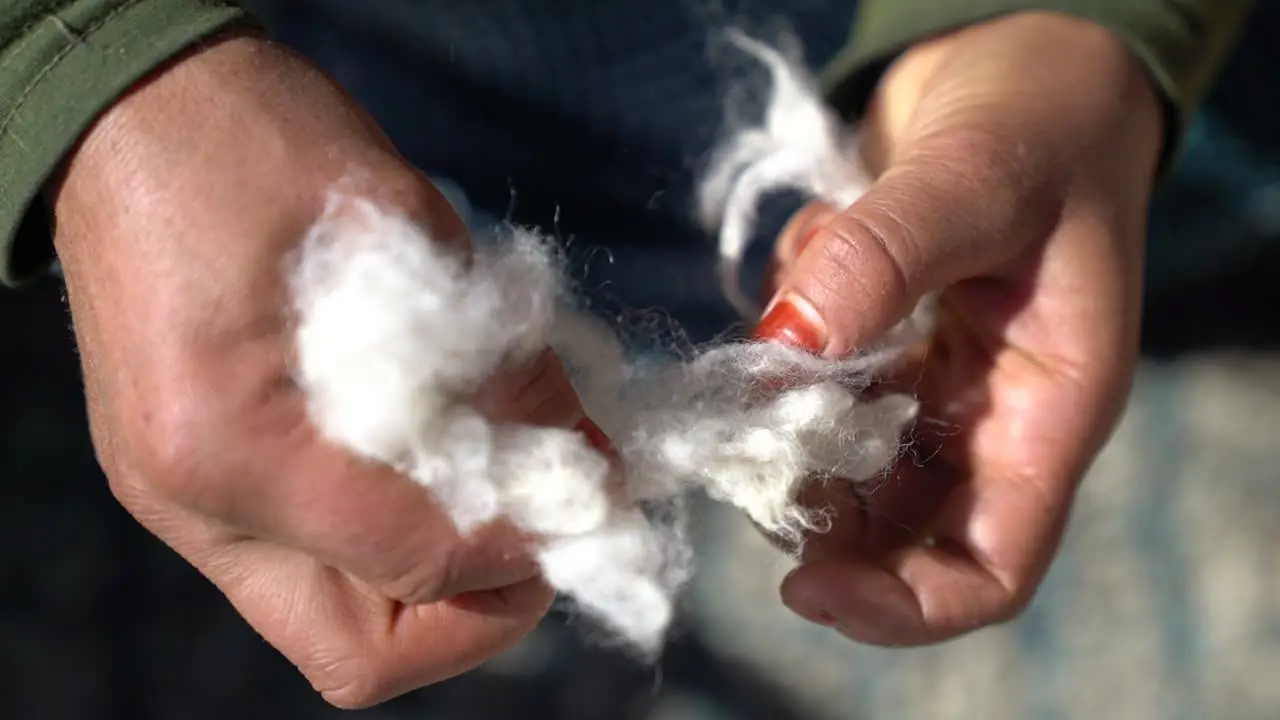
For a few weeks, a new wool rug releases its excess fibre as small balls of fluff. This is finishing wool, not a defect. Vacuum without scrubbing and it fades by itself. If a tuft sticks out, trim it level with the pile; never pull it.
3. Beat it every two months
Every two months or so, take the rug outside, hang it or lay it face down, and beat the back for a few minutes. Dust lodged at the foot of the knots falls out. Then vacuum both sides.
4. Act on a stain at once
Coffee, sauce, chocolate: blot straight away with a white cloth, without rubbing, from the outside in. Lift solids with a spoon. Then clean with a little Marseille soap or a wool cleaner diluted in lukewarm water, with gentle movements; rinse lightly and blot dry.
5. Red wine and coffee: white vinegar
Dab with one part white vinegar to two parts lukewarm water, blot, and repeat while colour still transfers to the cloth. Avoid hot water, which sets the stain.
6. Grease and stubborn stains
On grease, sprinkle fuller’s earth or baking soda, leave it for a few hours, then vacuum. On an old stain, try sparkling water, then baking soda once dry. If the stain holds, do not move on to stronger products.
7. Test first, and avoid detergents
Always test a product on a hidden corner with a cotton bud to check the colours do not run. Avoid bleach, ammonia, washing soda, oxygen stain removers and household detergents: they fade and weaken the wool.
8. Dry it completely
After any cleaning, dry the rug flat or hanging in a ventilated room, out of strong sun, and make sure the back is dry too. A damp rug smells, draws moths and keeps rings. Never use a radiator or a hair dryer up close.
9. Turn it every six months
Turn the rug 180° every six months and shift the furniture on it slightly: wear and light spread evenly, and the pile recovers. An ice cube left in a furniture dent helps the fibres rise again.
What never to do
A hand-knotted rug never goes in a washing machine. Steam cleaners and rented carpet shampooers soak the wool and the foundation with hot water and often alkaline detergents: the rug can shrink, its colours can bleed, and it stays damp for days.
A very dirty Berber rug
A heavily soiled rug, a deep stain or a moth attack calls for a cleaner who specialises in hand-knotted wool rugs, not a carpet cleaner. Ask how they wash (immersion or gentle hand washing with wool-safe products), how they dry, and whether they test the dyes first. Plan a professional clean about every two years, more often in busy places.
The full guide is on the Care page.