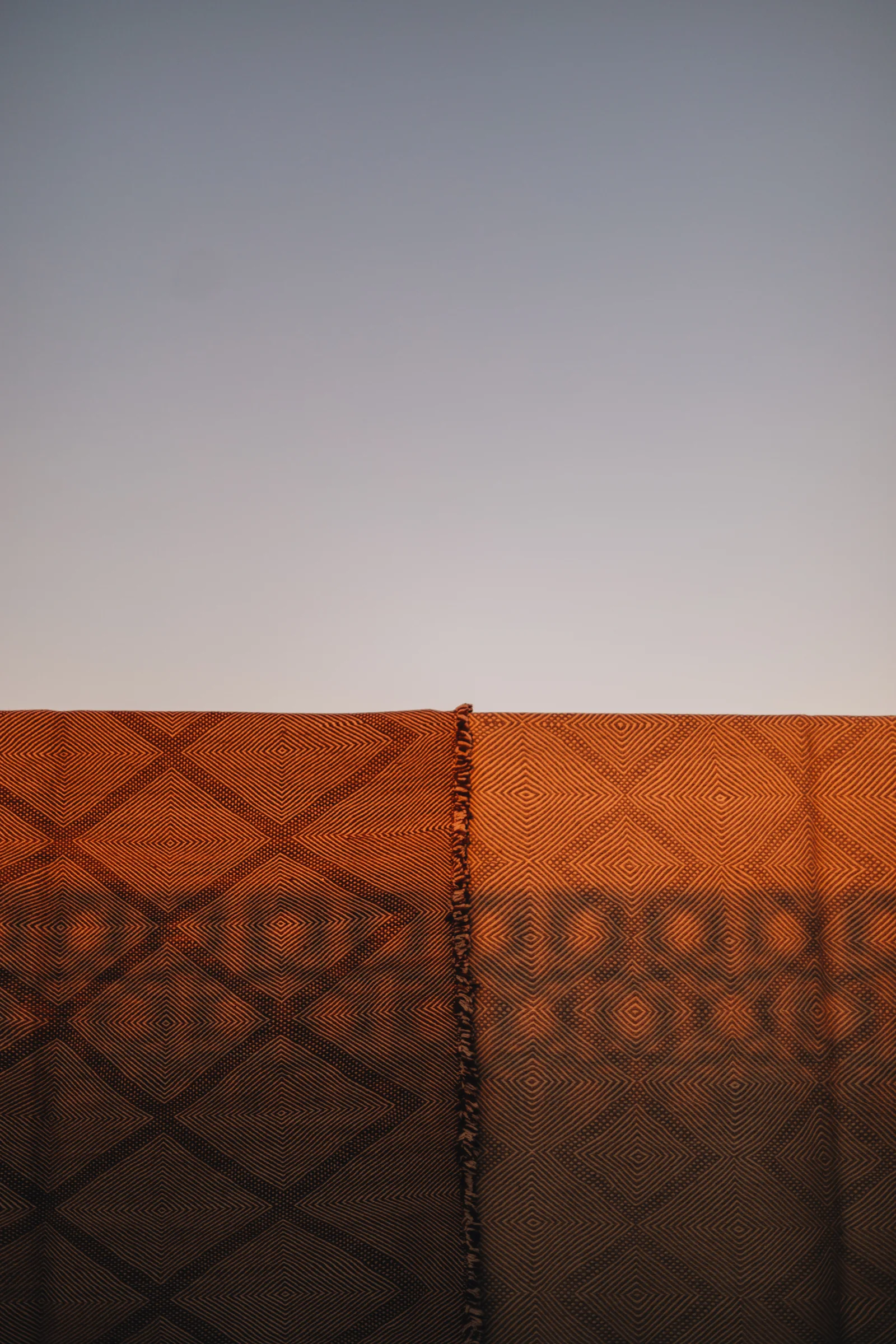
Ivory wool, brown lines and diamonds, a deep pile: the Beni Ouarain rug is recognisable at a glance. Before it became a classic of contemporary interiors, it was the rug of a group of Middle Atlas tribes, their region and their culture.
The Beni Ouarain, tribes of the Middle Atlas
The Beni Ouarain, or Aït Ouarain, are a group of Amazigh tribes in the Middle Atlas mountains, between Fez and Taza. The region is cold for much of the year. The tribes live from farming and herding, and sell their produce at weekly souks and at moussems, the seasonal festivals.
To keep out the cold, women knotted very large, thick rugs that covered the floors of houses and tents and doubled as blankets. In recent decades, weavers have adapted the sizes to demand from around the world.
The wool
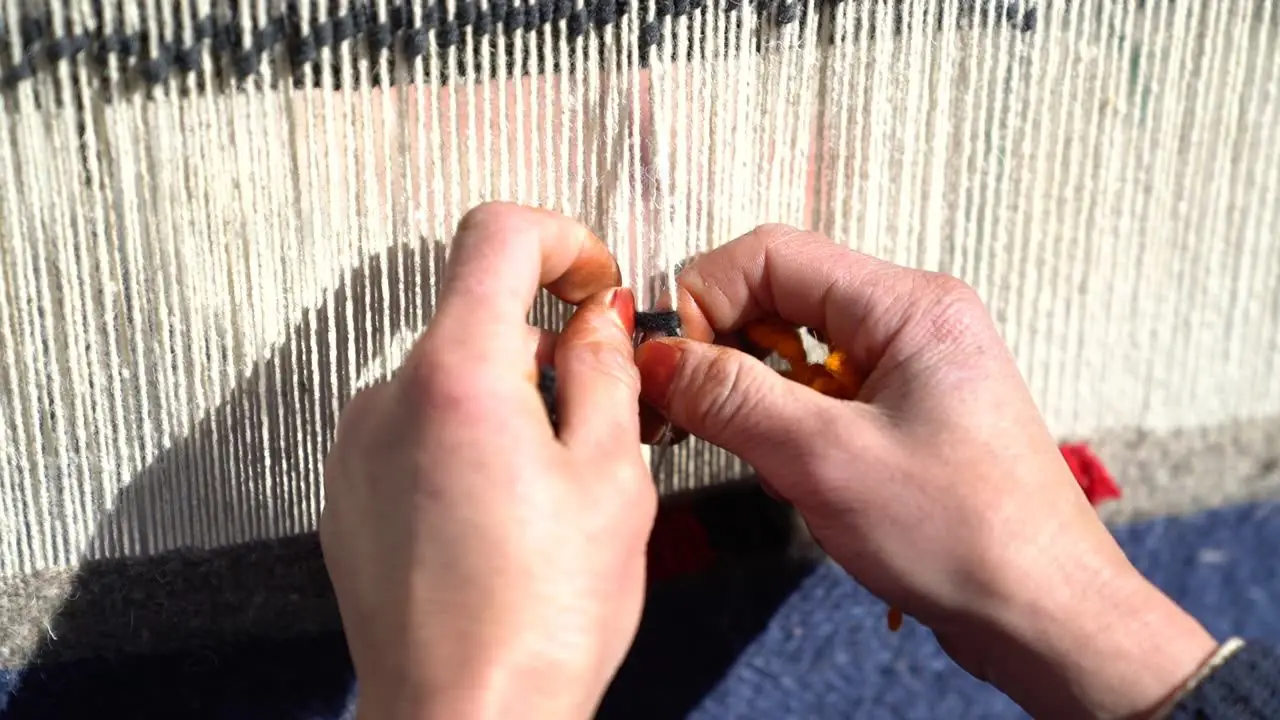
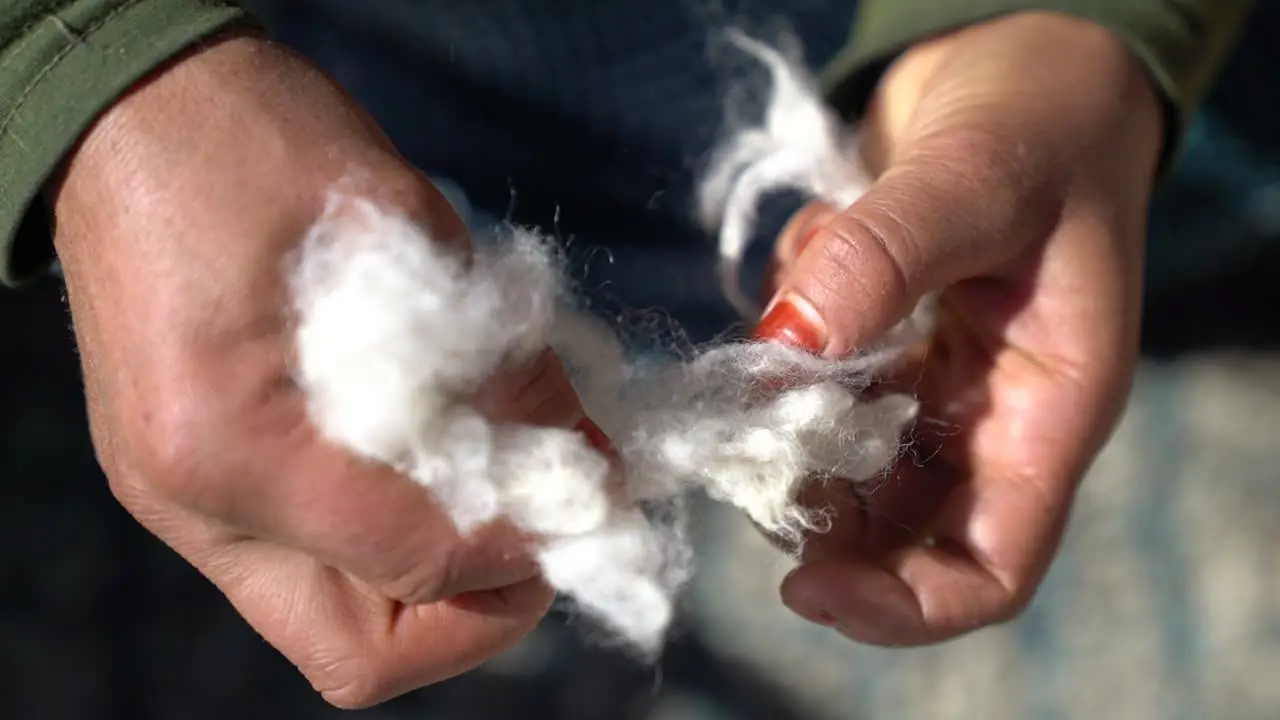
The tribes raise sheep with largely ivory fleece. The wool is shorn with shears in spring, then washed, carded and spun by hand. Weavers blend short, silky fibres with long, coarser and stronger ones. That balance sets the rug’s softness, how well it lasts and part of its value.
The rest depends on size, thickness and knot density. A large rug can take weeks, even months of work.
The diamond and other signs
The most common motif on old Beni Ouarain rugs is the diamond, often read as a sign of fertility and motherhood. Weavers repeat it as lattices, zigzags and broken lines, and today also compose freer geometric forms. Each rug keeps its irregularities: the hand shows. This vocabulary is covered in patterns and signs in Berber crafts.
From trend to classic
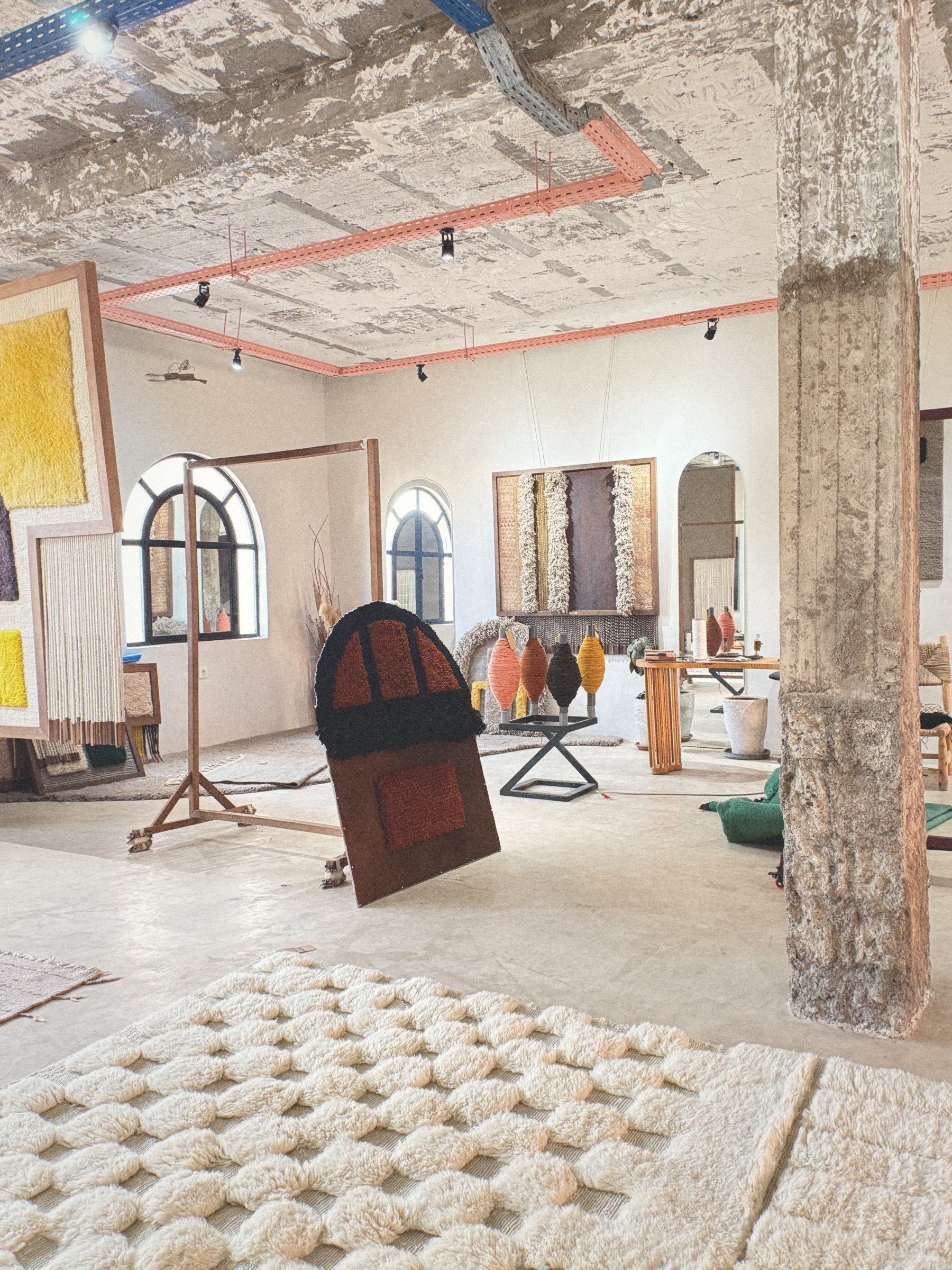
Twentieth-century modernist interiors took up the Beni Ouarain for its simplicity: a pale ground, a few lines. It suits Scandinavian, classic or contemporary rooms. Collectors look for old pieces; weavers now also make them in grey, blue or with dots.
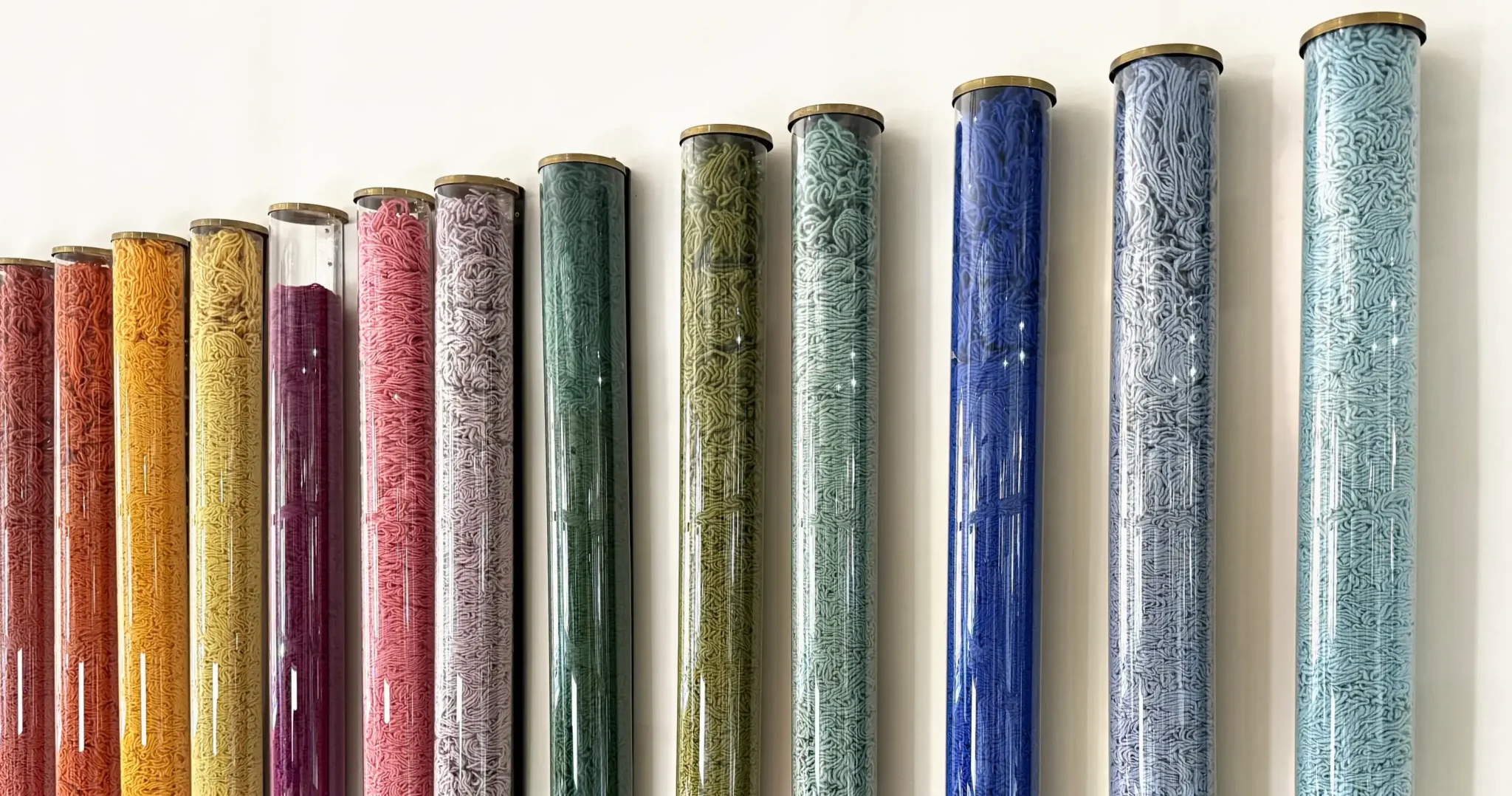
Further reading: vegetable silk (sabra) and, for care, clean your Berber carpet. The materials the studio uses are on the Materials page.