How a rug is made
From raw wool to a finished piece, in nine steps, all by hand. Every Tribaliste rug is designed in Marrakesh and made to order in Morocco; this is what happens between the drawing and the delivery.
- Material
- Wool
- Steps
- 9, all by hand
- Surfaces
- Carved pile · Flatweave
- Designed in
- Marrakesh
- Made in
- Morocco
- Lead time
- 2 months minimum
Nine steps, by hand
Washing the wool
Raw wool is washed in cold water, by hand, until the water runs clear.
Opening
Dried in the sun, then opened and combed by hand so the fibres lie in one direction.
Picking
Before spinning, the raw wool is carefully sorted and cleaned by hand, removing impurities and selecting the fibres for their quality, softness and strength.
Spinning
Hand-spun on a traditional drop spindle, the wool is transformed into yarn, with its thickness carefully adjusted to the texture and character of each piece.
Winding
The yarn is measured and wound, ready for the dye bath and the loom.
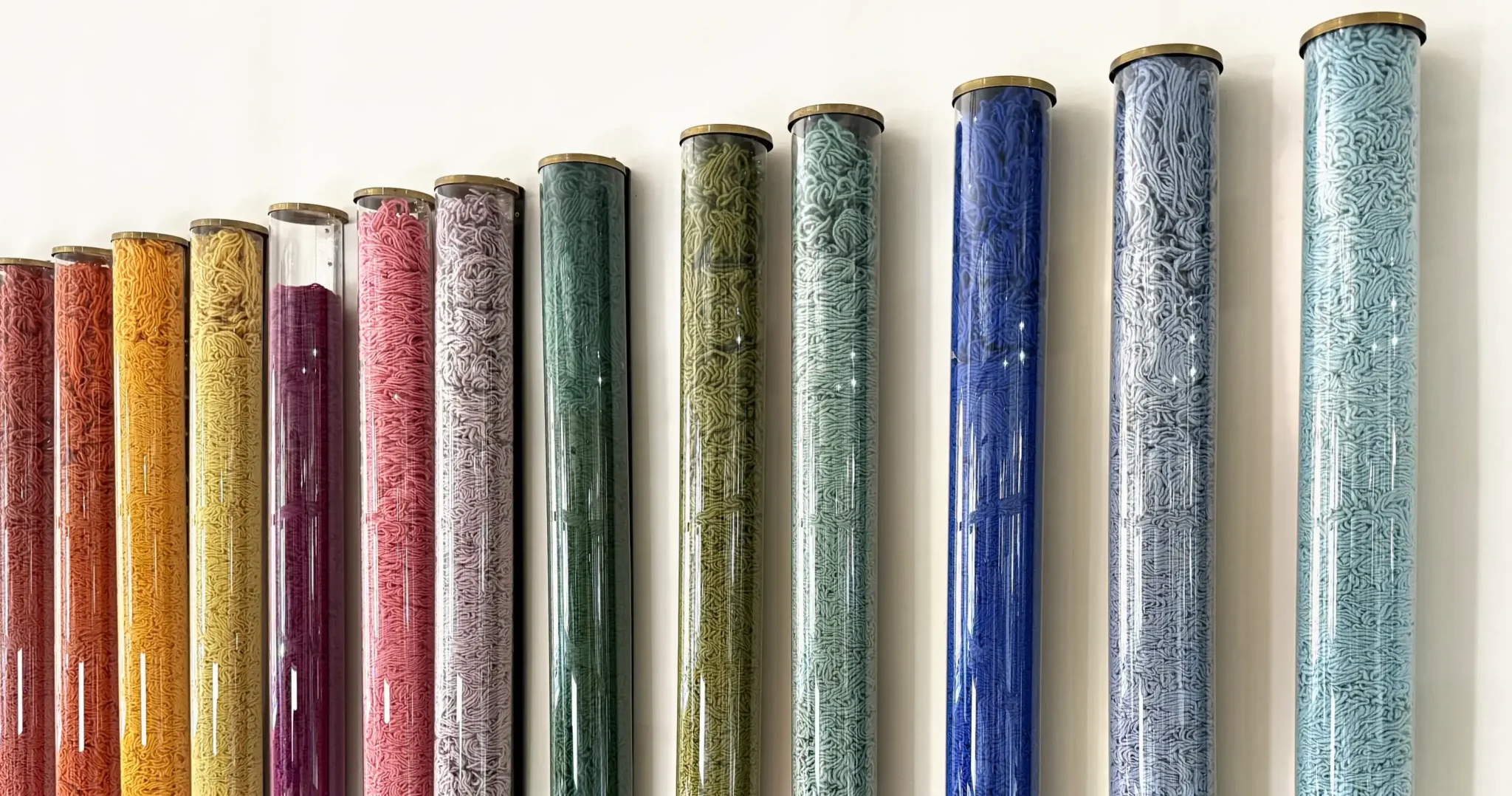
Dyeing
Dyed in small baths, one colour at a time, then dried in the open air.
Knotting
Knotted by hand on a vertical loom, row after row, each row beaten down with a comb.
Washing the rug
Washed, brushed and rinsed by hand to open the pile and settle the colours.
Drying
Dried flat in the sun on the rooftops, then checked, sheared and finished.
The drawing decides everything
Each piece starts at the studio in Marrakesh as a drawing: lines, blocks and paths laid out like a plan, with the colourway and the pile height. The loom follows the drawing knot by knot; on carved pieces, the relief is then cut into the wool by hand.
The materials and the woolWhy every piece takes time
Nothing is kept in stock: the wool is prepared, dyed and knotted for your order, in your size and colourway. These nine steps take 10 to 12 weeks for a standard size up to 3×2 m, 12 to 14 weeks above.
Each piece is checked, photographed and sent to you before it is rolled and shipped.
Further reading: Patterns and signs in Berber crafts · The work of the Berber weaver · Moroccan craftsmanship in all its forms