Our materials
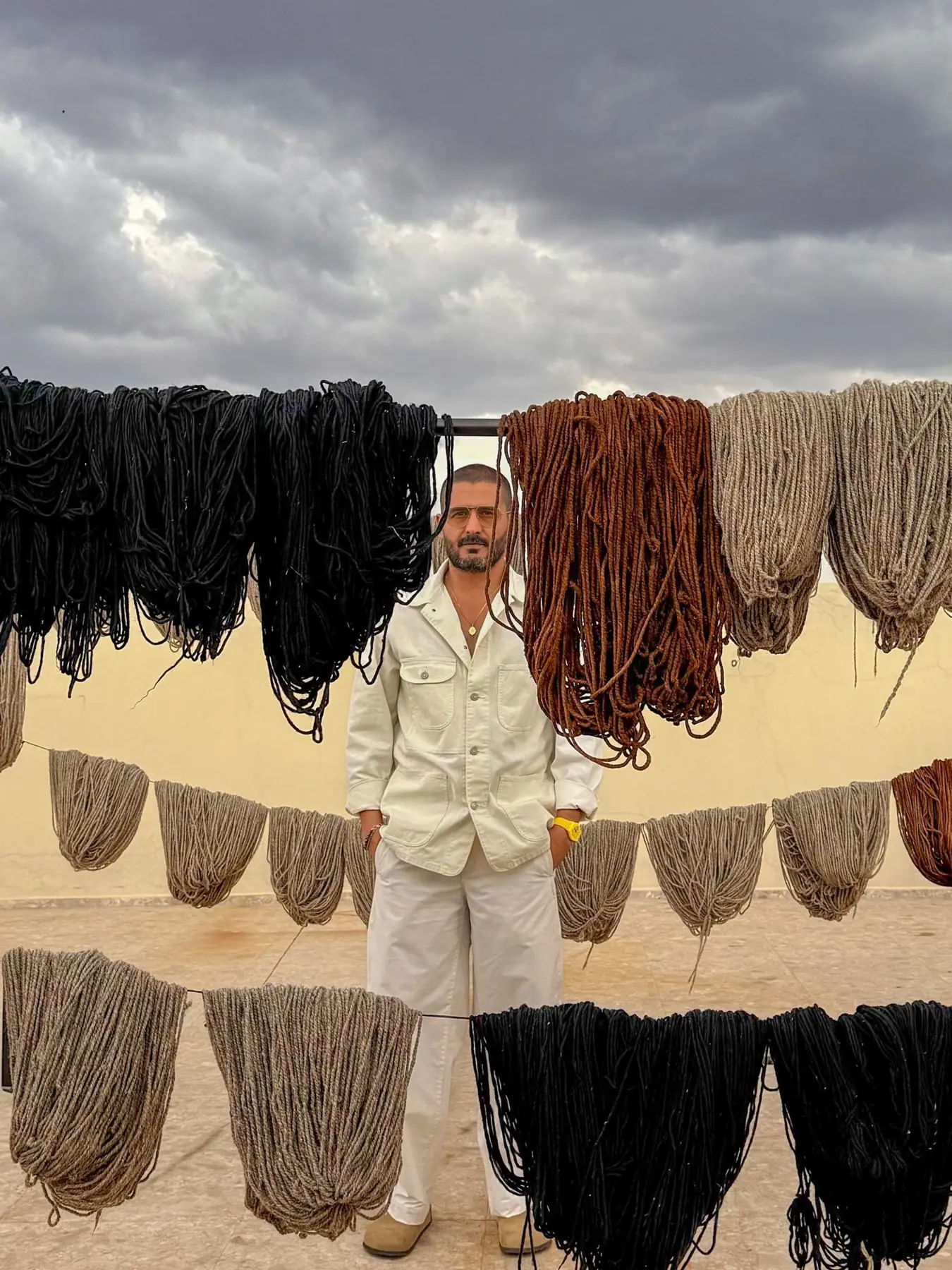
Tribaliste works in wool, and almost only in wool. Washed, spun and dyed by hand, it becomes a carved pile or a flatweave, in 44 colourways or in its own undyed tones. No synthetic fibre, no machine pile.
Materials and surfaces
View collections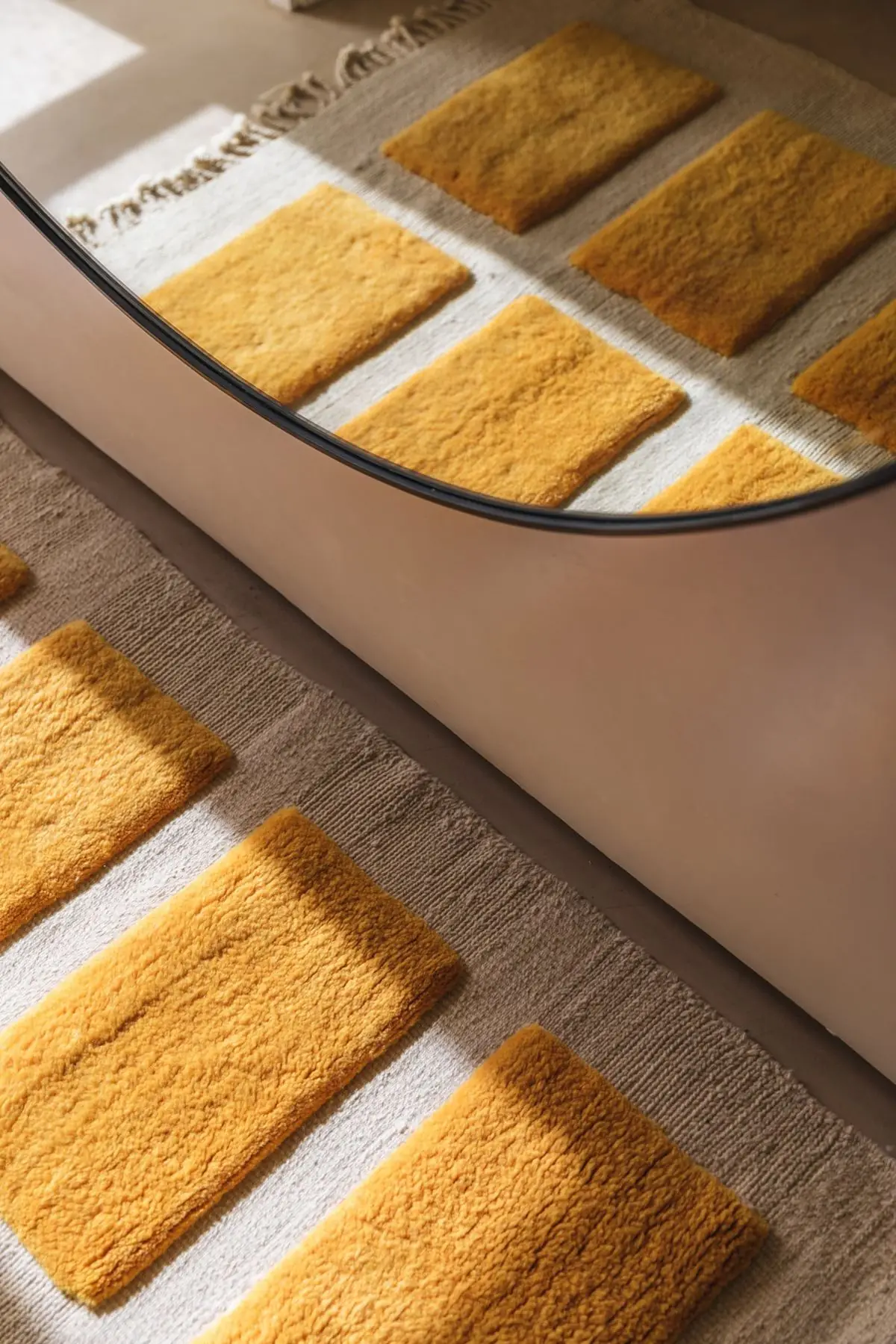
Carved wool pile
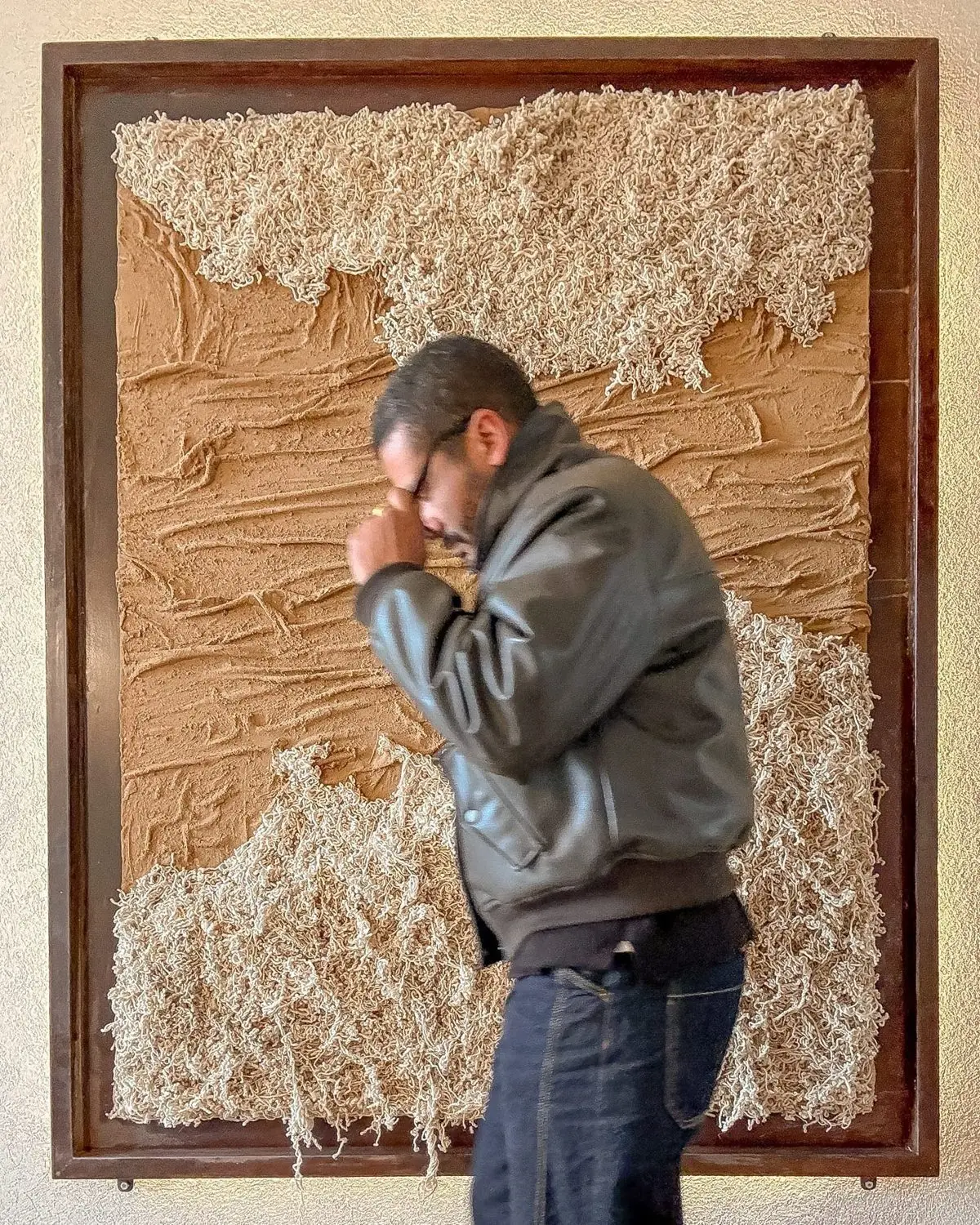
The studio’s main surface. A dense wool pile, knotted by hand, then cut to different heights so the drawing appears in relief. Soft and deep underfoot, it is the surface of the Labyrinthe and Topography collections.
Resistance: high; the pile springs back after furniture and footsteps
Feel: soft, deep, warm
Shine: matte
Shedding: light in the first weeks, then none
Best for: living rooms, bedrooms, suites
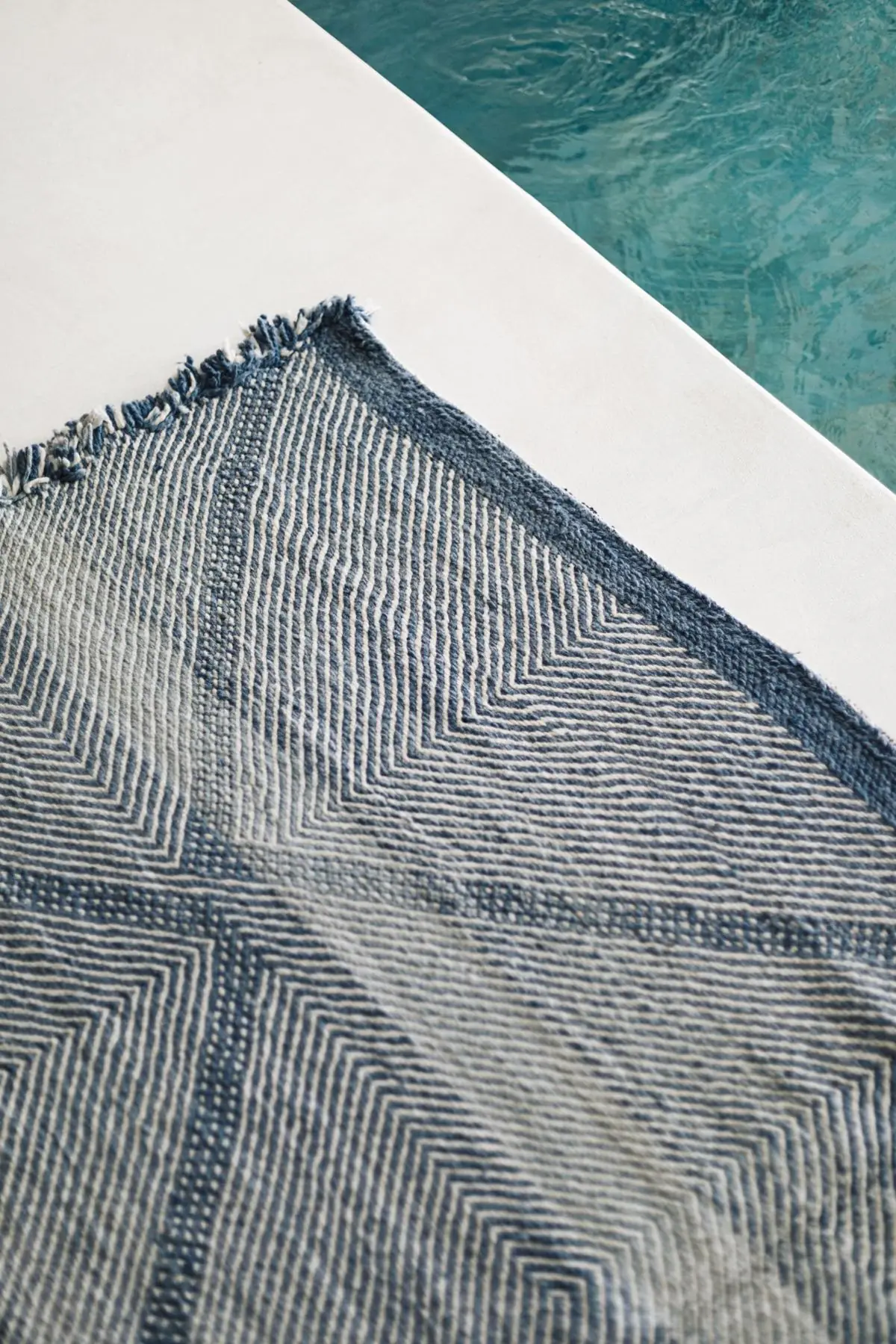
Flatweave wool
The same wool, woven flat with no pile: the drawing is woven into the surface. Thin, firm and stable, it lies flat under furniture and takes chairs and traffic. The surface of the Free Weave and Edition Libre collections.
Resistance: very high
Feel: firm, thin, lies flat
Shine: matte, slight sheen in raking light
Shedding: almost none
Thickness: 0.2 in
Best for: dining rooms, corridors, kitchens, contract spaces
Undyed wool
Wool left in its own colour: cream, sand, grey, brown, sorted from the fleece rather than dyed. The lanolin stays in the fibre, which helps it resist dirt and water.
Resistance: high
Feel: soft, slightly irregular
Colour: natural tones, with slight variation from one piece to the next
Dye: none
Best for: pieces where the material itself is the drawing
The palette
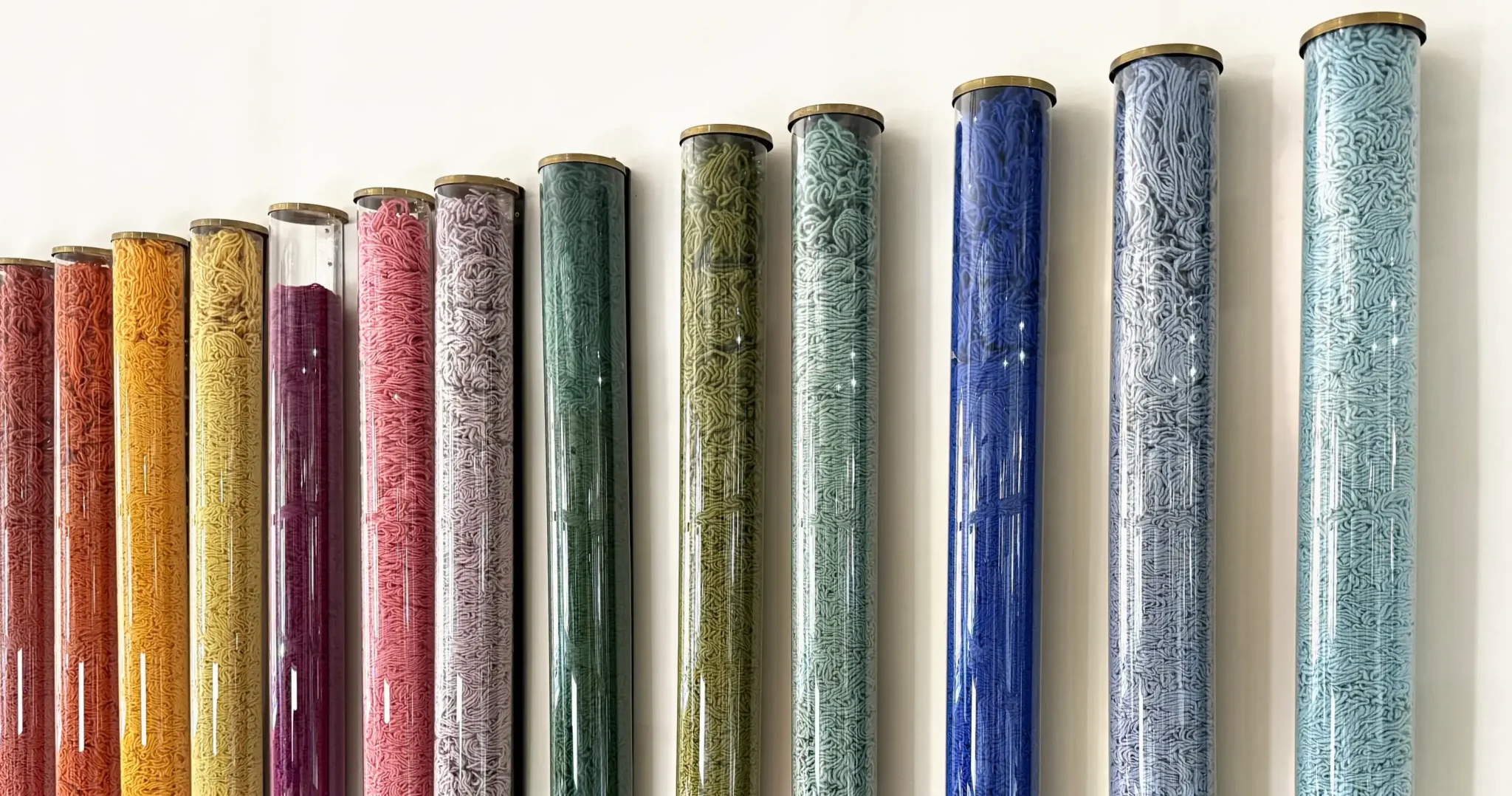
Two palettes kept on the wall of The Lab and in the material book: 24 colourways for the carved pile and 20 for the flatweave. Any colour of a project can be matched in wool and approved on a sample before making.
Carved pile: 24 colourways
Flatweave: 20 colourways
Custom colour: matched to paint, fabric or stone, sampled first
Samples: on request · the material book for studios
From raw fleece to finished piece in nine steps, all by hand: washing, opening, picking, spinning, winding, dyeing, knotting, washing, drying.
See the productionA fibre made to be walked on
Wool springs back after a chair, holds colour in the sun, resists dirt through its own lanolin and manages humidity, which keeps dust mites and mould away. It is renewable, biodegradable, and lasts decades.
It asks for little: a gentle vacuum each week, a spill blotted at once, a professional clean every few years. The care guide gives the full routine. The wool comes from the Middle Atlas, in Morocco.
Our materials
Tribaliste works in wool, and almost only in wool. Washed, spun and dyed by hand, it becomes a carved pile or a flatweave, in 44 colourways or in its own undyed tones. No synthetic fibre, no machine pile.
Materials and surfaces
View collectionsCarved wool pile
The studio’s main surface. A dense wool pile, knotted by hand, then cut to different heights so the drawing appears in relief. Soft and deep underfoot, it is the surface of the Labyrinthe and Topography collections.
Resistance: high; the pile springs back after furniture and footsteps
Feel: soft, deep, warm
Shine: matte
Shedding: light in the first weeks, then none
Best for: living rooms, bedrooms, suites
Flatweave wool
The same wool, woven flat with no pile: the drawing is woven into the surface. Thin, firm and stable, it lies flat under furniture and takes chairs and traffic. The surface of the Free Weave and Edition Libre collections.
Resistance: very high
Feel: firm, thin, lies flat
Shine: matte, slight sheen in raking light
Shedding: almost none
Thickness: 0.2 in
Best for: dining rooms, corridors, kitchens, contract spaces
Undyed wool
Wool left in its own colour: cream, sand, grey, brown, sorted from the fleece rather than dyed. The lanolin stays in the fibre, which helps it resist dirt and water.
Resistance: high
Feel: soft, slightly irregular
Colour: natural tones, with slight variation from one piece to the next
Dye: none
Best for: pieces where the material itself is the drawing
The palette
Two palettes kept on the wall of The Lab and in the material book: 24 colourways for the carved pile and 20 for the flatweave. Any colour of a project can be matched in wool and approved on a sample before making.
Carved pile: 24 colourways
Flatweave: 20 colourways
Custom colour: matched to paint, fabric or stone, sampled first
Samples: on request · the material book for studios
From raw fleece to finished piece in nine steps, all by hand: washing, opening, picking, spinning, winding, dyeing, knotting, washing, drying.
See the productionA fibre made to be walked on
Wool springs back after a chair, holds colour in the sun, resists dirt through its own lanolin and manages humidity, which keeps dust mites and mould away. It is renewable, biodegradable, and lasts decades.
It asks for little: a gentle vacuum each week, a spill blotted at once, a professional clean every few years. The care guide gives the full routine. The wool comes from the Middle Atlas, in Morocco.
Further reading: Basketry: weaving techniques and materials · Beni Ouarain, from tribes to carpets · Vegetable silk, or sabra: carpets, cushions and bolsters