The history of the Berbers of North Africa is long, rich and partly unknown. From Morocco to Egypt, from the Rif mountains to the Saharan oases, Berber culture has kept, across the centuries, a language, signs, skills and a strong bond with the land, the community and hospitality.
Berber or Amazigh?
“Berber” comes from the Greek barbaros, then the Latin barbarus: someone who did not speak the language of the Greeks or Romans. The Arabs took it up as “barbar”. The people themselves use Imazighen (singular Amazigh), a word often translated as “free man”. Today one speaks of Amazigh culture as much as Berber culture.
Where do the Berbers come from?
Berber origins are still debated. What is known: they are the earliest known inhabitants of North Africa, present long before the Phoenicians, and Egyptian, Greek, Punic and Roman texts already mention them. Linguists place the Berber languages in the large Afro-Asiatic family, alongside ancient Egyptian and the Semitic languages.
Ancient accounts proposed many origins: Canaanite for some late-antique authors such as Procopius, Yemeni for medieval Arab genealogists. These are legends and hypotheses. The Berbers are a set of diverse groups, joined by related languages and practices more than by a single origin.
A history of the Amazigh
From Carthage to Rome
The Berber kingdoms of Numidia and Mauretania traded, allied and fought with Carthage and then Rome, before becoming Roman provinces. Before Islam, beliefs were many: local cults, alongside Judaism and Christianity.
The Arab conquest and the great revolt
The Arab conquest reached the Maghreb at the end of the seventh century. In 740 the great Berber revolt drove Umayyad rule out of much of the western Maghreb, where independent kingdoms then arose.
Arabisation came in stages: the conquest of the seventh and eighth centuries; the arrival of the Banu Hilal Bedouin tribes in the eleventh century; the Almohads’ resettlement of Arab tribes in Morocco in the twelfth; and the arrival of Andalusians between the fifteenth and seventeenth centuries. Many Amazigh communities kept their language in the Rif and Atlas mountains.
The great Berber dynasties of Morocco
- The Almoravids (11th–12th century), from the Sahara, founded Marrakesh.
- The Almohads (12th–13th century), from the High Atlas, ruled from Morocco to Spain and Tunisia.
- The Marinids (13th–15th century), of Zenata origin, made Fez their capital.
Berber peoples and tribes
There is no single Berber people. The Tuareg of the Sahara, the Kabyles and Chaouis of Algeria, the people of the Siwa oasis in Egypt, the Nafusi of Libya are all Amazigh, each with their own identity.
In the fourteenth century the historian Ibn Khaldun divided the Berbers into two great branches, the Botr and the Branes, made up of confederations: Sanhaja, Masmuda, Zenata…
In Morocco three broad groups are often distinguished:
- the Riffians, in the Rif mountains to the north;
- the tribes of the Middle Atlas and eastern High Atlas: Aït Ouarain, Zayane, Beni M’guild, Aït Seghrouchen, Marmoucha, Aït Hadiddou, Aït Atta;
- the Chleuh, in the western High Atlas, the Anti-Atlas and the Souss valley.
Many tribes have given their names to rugs: Beni Ouarain, Beni M’guild, Aït Ouaouzguite.
The Berber language in Morocco
Three main languages
- Tarifit, in the Rif;
- Central Atlas Tamazight, in the Middle Atlas and eastern High Atlas;
- Tachelhit, in the Souss, western High Atlas and Anti-Atlas, the most widely spoken.
These languages are close and share much vocabulary. According to the 2024 census, about a quarter of Moroccans use Amazigh in daily life; Amazigh associations dispute the figure and consider it higher. Many Moroccans also speak Darija, Moroccan Arabic, and other languages.
Tifinagh
The Berber script, Tifinagh, derives from the Libyco-Berber script attested since antiquity. The Tuareg always kept it. In Morocco the Royal Institute of Amazigh Culture (IRCAM), founded in 2001, set a standard form, taught in schools since 2003.
An official language
The 2011 Constitution made Amazigh an official language of Morocco alongside Arabic. Tifinagh now appears on public buildings and road signs, and the Amazigh New Year, Yennayer, has been a public holiday since 2024.
The Amazigh flag and sign
The Amazigh flag was adopted by the World Amazigh Congress in 1997. Its three bands stand for the sea (blue), the land and mountains (green) and the desert (yellow). In the centre, in red, the Tifinagh letter yaz (ⵣ), the letter of the “free man”, has become the symbol of Amazigh identity.
Signs, another language
For a long time many Amazigh women could neither read nor write. They developed a vocabulary of signs instead, passed on through weavings, pottery, walls, jewellery and tattoos. It is said that young brides, living far from their village, sent their mothers weavings only they could read. This vocabulary is covered in patterns and signs in Berber crafts.
Berber culture today
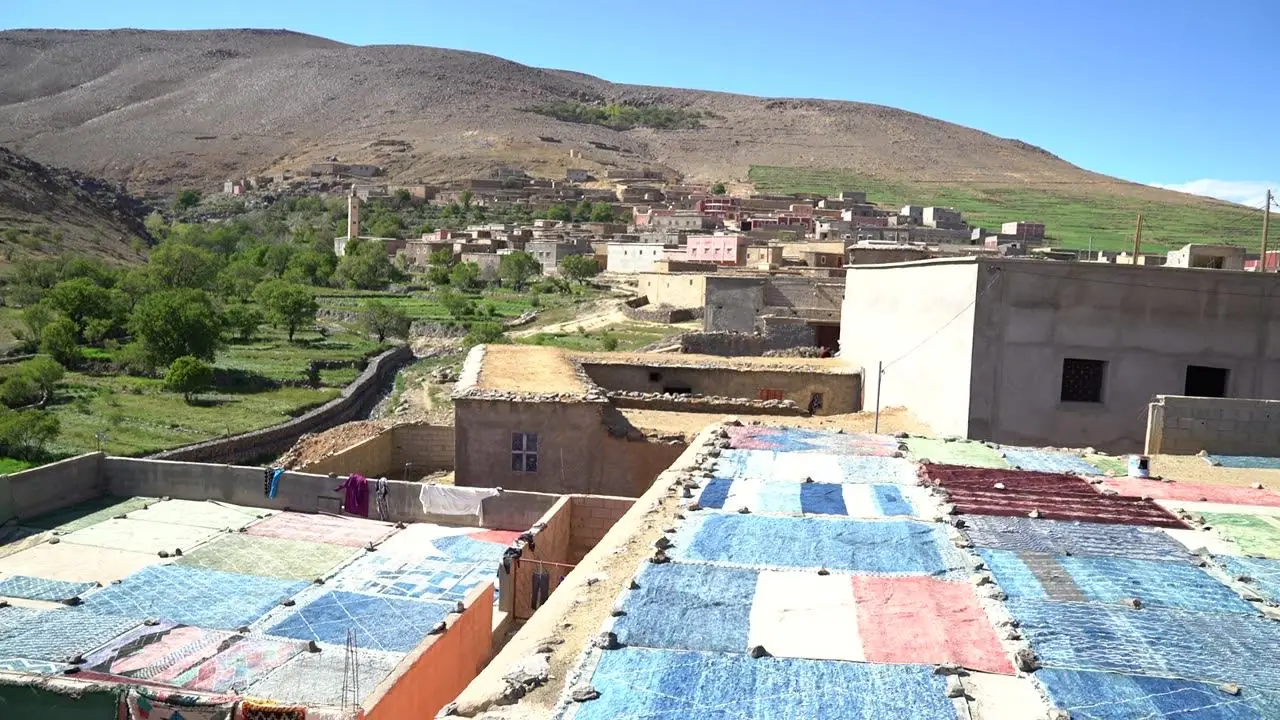
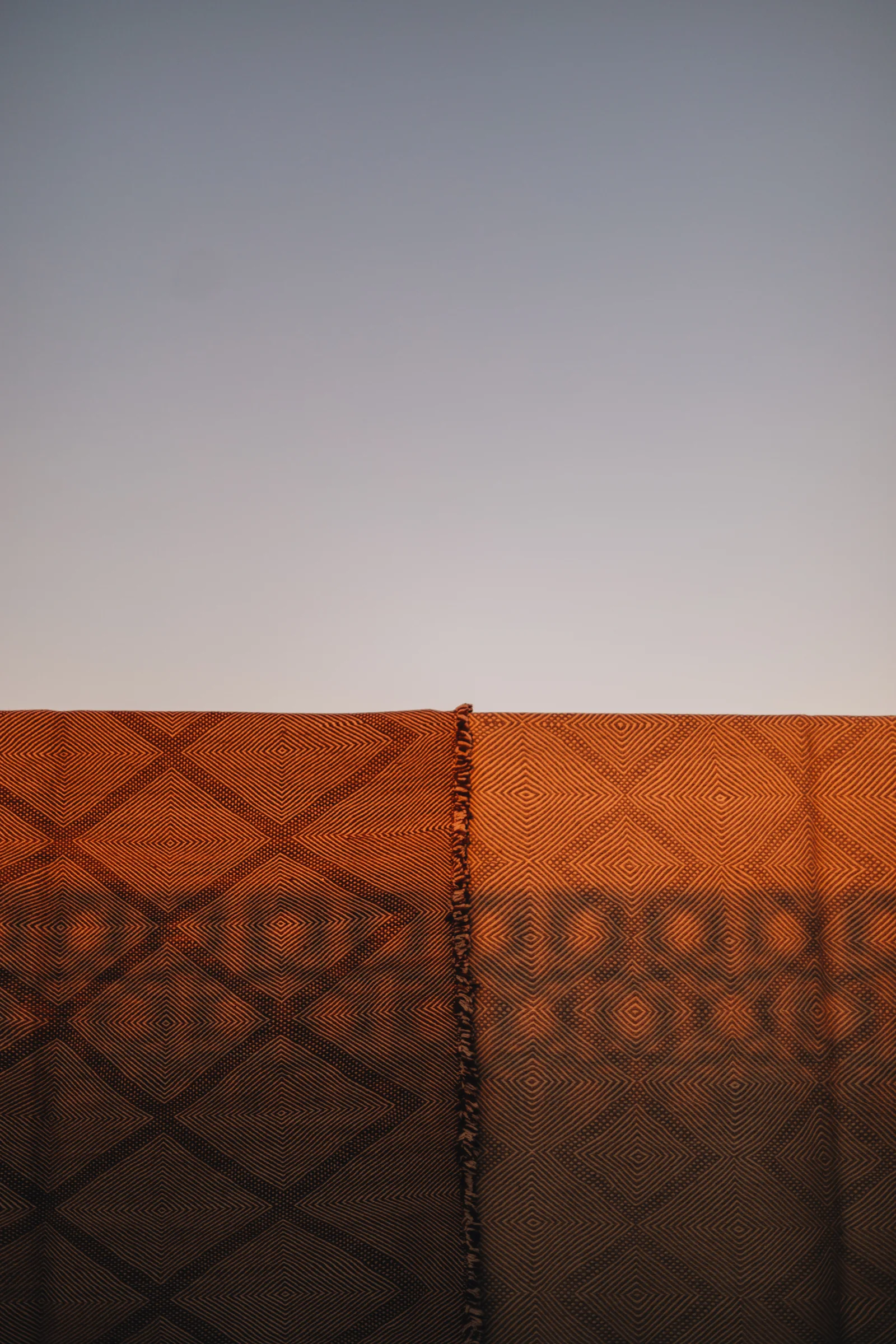
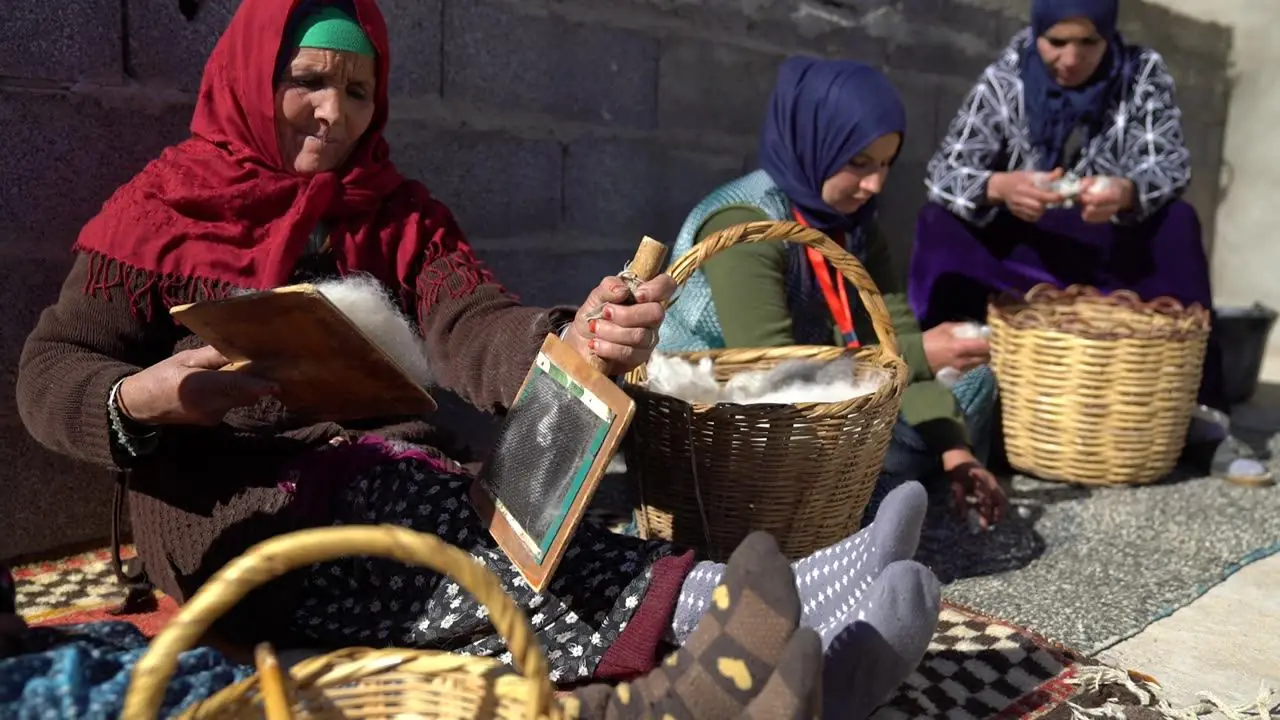
Berber culture and traditions remain very present in Morocco: in weddings, births, festivals, music, henna, clothing and daily life. They show in crafts too: pottery, wool weaving, silver jewellery, rugs such as the Beni Ouarain, the earthen architecture of the villages.
Further reading: the most beautiful villages in Morocco and Moroccan craftsmanship in all its forms.
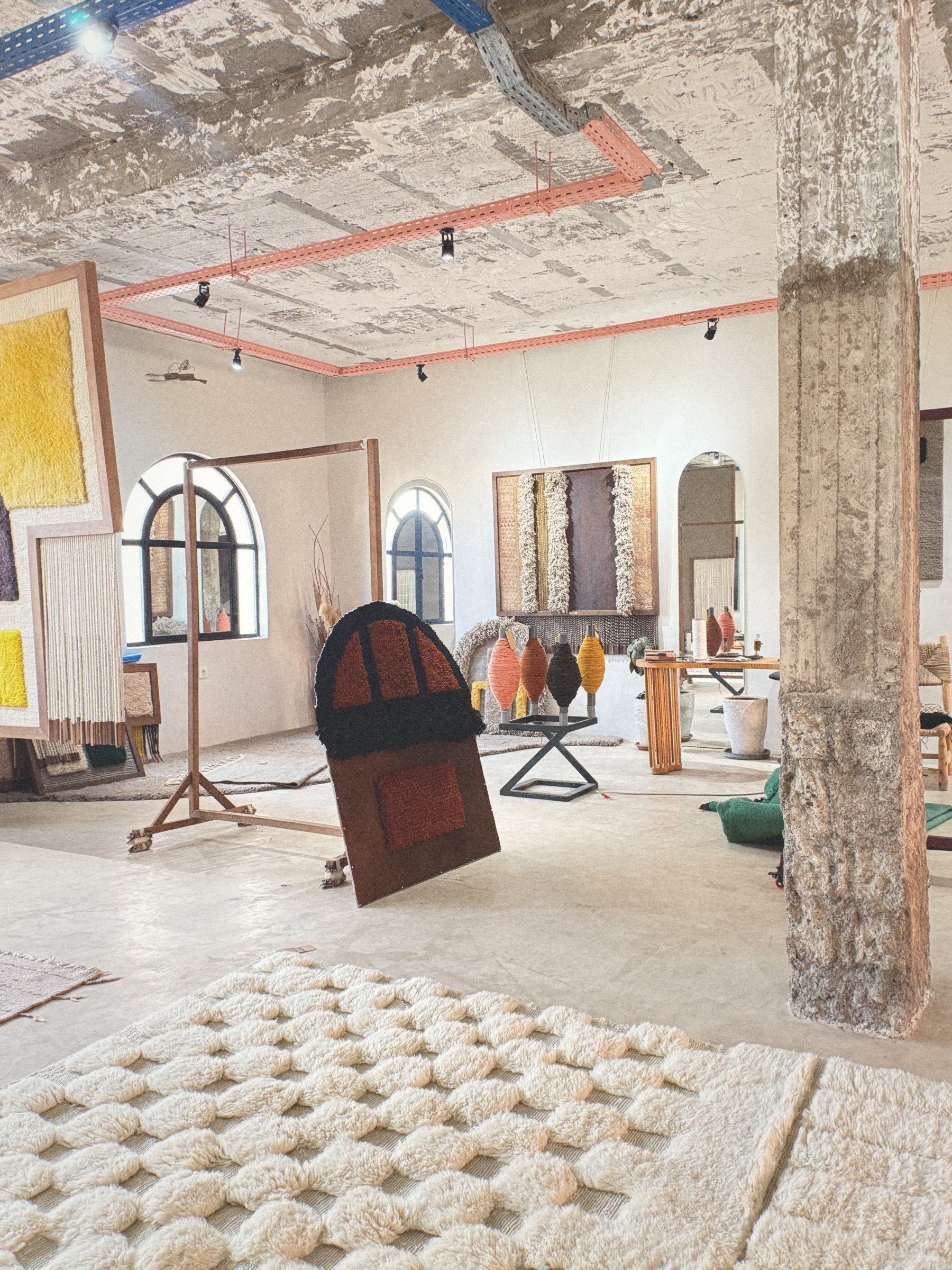
Tribaliste is a design studio based in Marrakesh. Its rugs and artworks are presented in the Journal.